A product that leaves a factory has gone through a series of processes before finally reaching the buyer. These include preparing raw materials, operating machines, inspecting production results, and packaging goods for shipment. All these activities are part of the production process.
For manufacturing companies, the production process is one of the activities that determines the smooth operation of the business. Poor planning can lead to wasted raw materials, delayed work, or production results that do not meet the desired specifications.
Therefore, production activities require clear organization. Companies must know what will be produced, how many units are needed, how they will be manufactured, and what quality standards must be met.
So, what exactly is the manufacturing production process? What are the stages involved, and how is quality control carried out in factories?
What Is the Production Process in Manufacturing?
The production process is the activity of processing various resources to produce goods or services that have practical value. In industrial activities, this term generally refers to the transformation of raw materials into semi-finished or finished goods.
The resources used may include raw materials, labor, machines, equipment, energy, and time. All these resources must be managed to ensure that production activities generate goods according to requirements.
Meanwhile, manufacturing is the activity of processing raw materials or components into products through a series of physical operations or other processes, using human labor, machines, and production equipment.
For example, plastic pellets that initially come in granular form can be heated and shaped using machines to produce plastic pallets, storage containers, or industrial components.
In this example, plastic pellets serve as the raw material, molding machines are the processing equipment, and the resulting plastic goods are the finished products.
What Is the Difference Between Production and Manufacturing?
Production has a broader meaning because it includes activities that generate both goods and services.
Manufacturing specifically refers to the creation of goods through material processing or component assembly.
Thus, manufacturing activities are part of the production process, but not all production activities can be classified as manufacturing.
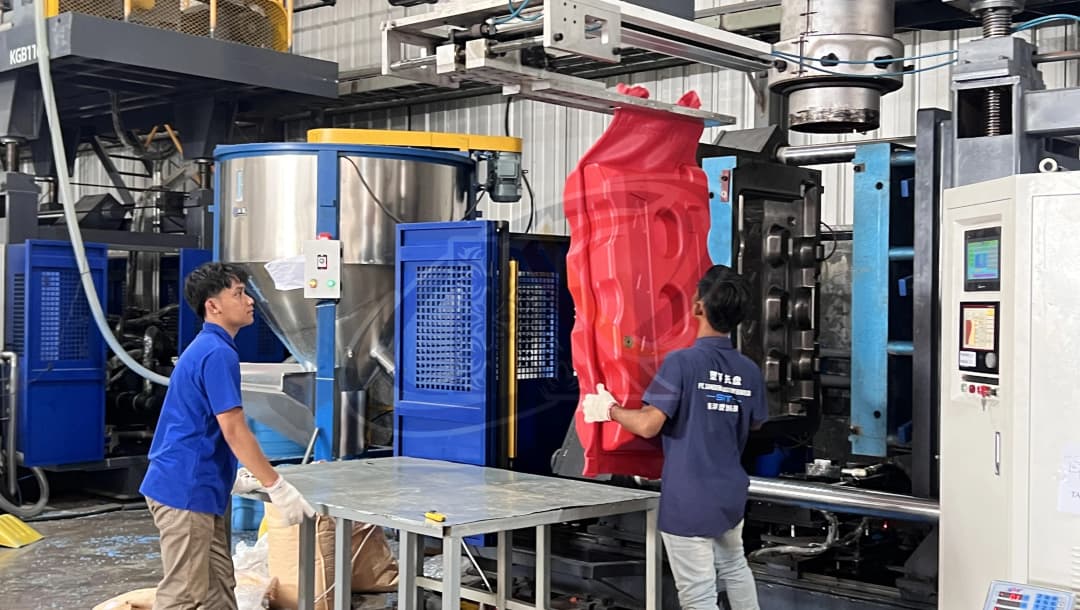
In practice, the manufacturing process involves several interconnected departments. The planning department determines production requirements, the warehouse provides raw materials, machine operators operate the equipment, and quality control personnel inspect the results.
Why Does the Production Process Need to Be Planned?
Factories cannot rely solely on the availability of raw materials and machines. Without proper planning, companies may experience overproduction when demand is low or product shortages when orders increase.
Planning is necessary to estimate the quantity of products to be manufactured, production time, material requirements, and available machine capacity.
For example, a factory receives an order for 1,000 plastic pallets that must be completed within a specified period. Before production begins, the company must calculate material availability, daily machine capacity, workforce requirements, and the time needed for product inspection.
If any of these requirements cannot be met, the production schedule may be disrupted.
In addition to helping fulfill orders, planning is also useful for controlling costs. The consumption of raw materials, electricity, machine operating time, and labor must be calculated to ensure that the process runs efficiently.
The department responsible for these activities is commonly known as Production Planning and Inventory Control (PPIC). Its responsibilities involve production planning and controlling inventories of materials and goods.
Stages of the Production Process from Start to Finish
Every company has different production stages depending on the type of products, raw materials, and technology used.
A food factory certainly has a different production workflow from a plastic factory or an automotive component manufacturer. Nevertheless, several general stages are commonly found in manufacturing activities.
1. Planning and Determining Product Specifications
Before work begins, the company determines the type of goods to be produced along with the specifications that must be met.
These specifications may include size, shape, material, color, function, production quantity, and other technical requirements.
For newly developed products, companies may also create product samples or conduct preliminary testing before starting large-scale production.
This stage is important because the specifications serve as a reference for the production and quality inspection departments.
2. Procurement and Inspection of Raw Materials
Once the requirements have been determined, the company prepares the raw materials according to the production plan.
Material selection must consider the type of material, quality, quantity, and compliance with product requirements.
In the plastics industry, for example, the characteristics of the resin used must be suitable for the molding method and the intended application of the product.
Incoming materials must also be inspected before proceeding to the next stage. Inspections may include material identification, packaging condition, supplier documents, and certain parameters established by the company.
The purpose is to identify unsuitable materials before they are used in production.
3. Preparation of Machines and Equipment
Production machines must be prepared according to the type of work to be performed.
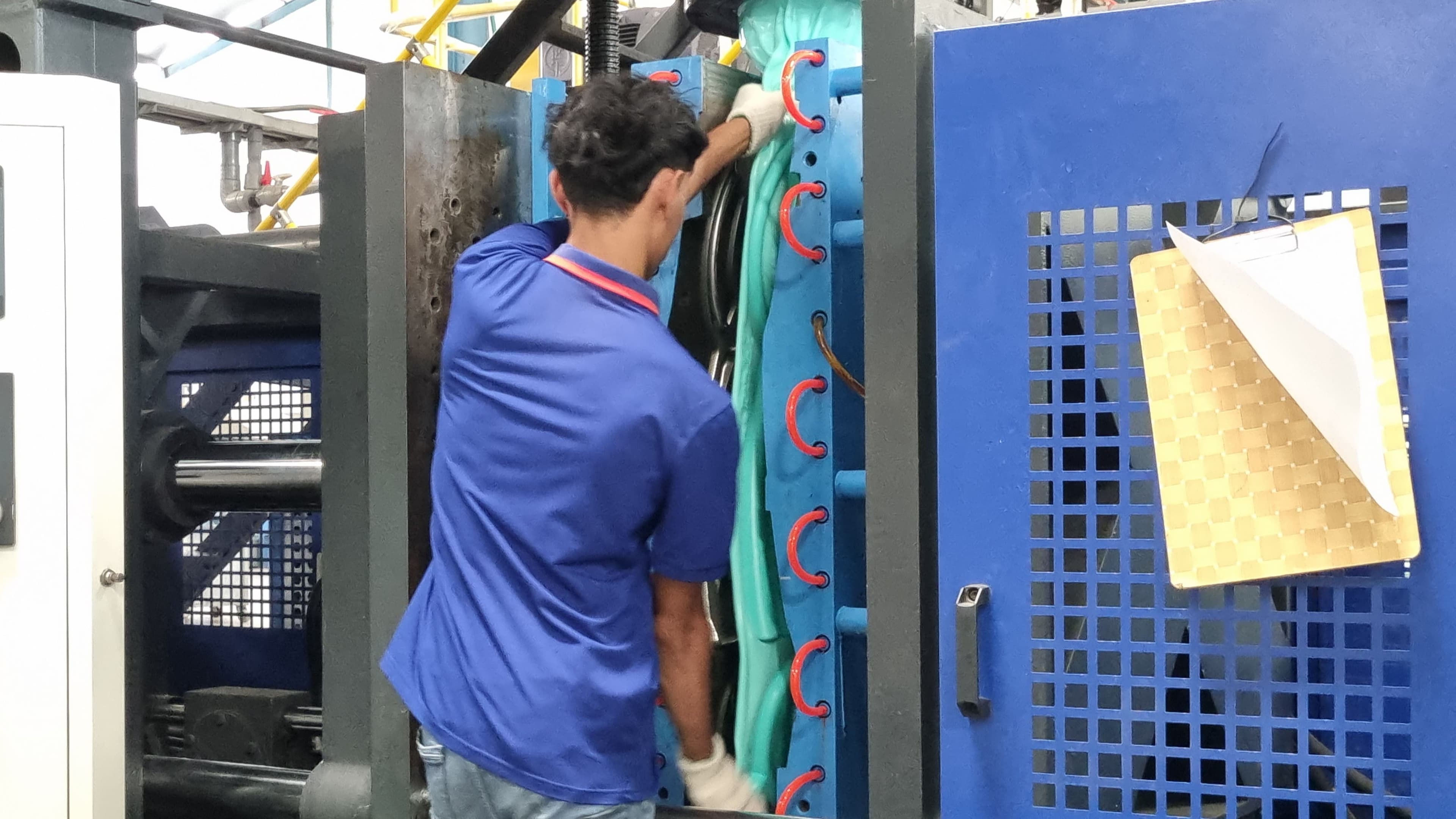
Preparation may include installing molds, adjusting temperature, pressure, speed, processing time, and other parameters.
Operators also inspect the condition of the machines and ensure that supporting equipment can be used safely.
Errors during the preparation stage can affect production results. For example, incorrect temperature settings may prevent plastic materials from forming properly.
Therefore, machine inspection before production is an important part of factory operations.
4. Processing or Forming Products
The next stage is the main activity, which involves transforming raw materials into the planned product form.
The processing method depends on the type of industry.
The metal industry may use cutting, casting, forming, or welding. The plastics industry uses techniques such as injection molding, blow molding, and extrusion.
During the process, operators monitor machine conditions and production results. If deviations are found, the process settings must be checked before work continues.
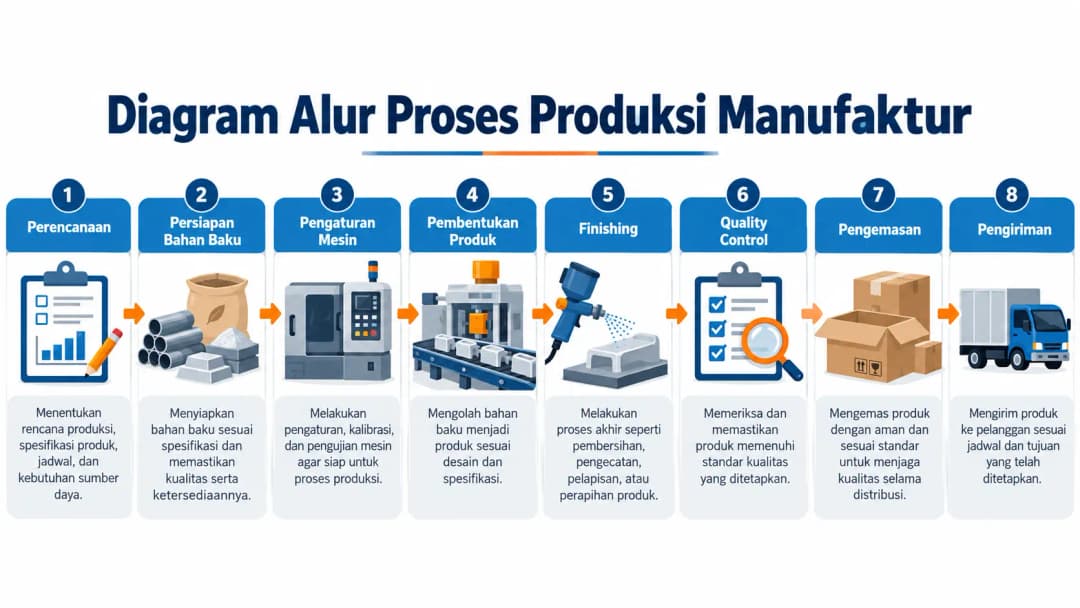
5. Finishing and Product Completion
Products that come out of machines are not necessarily ready for immediate use.
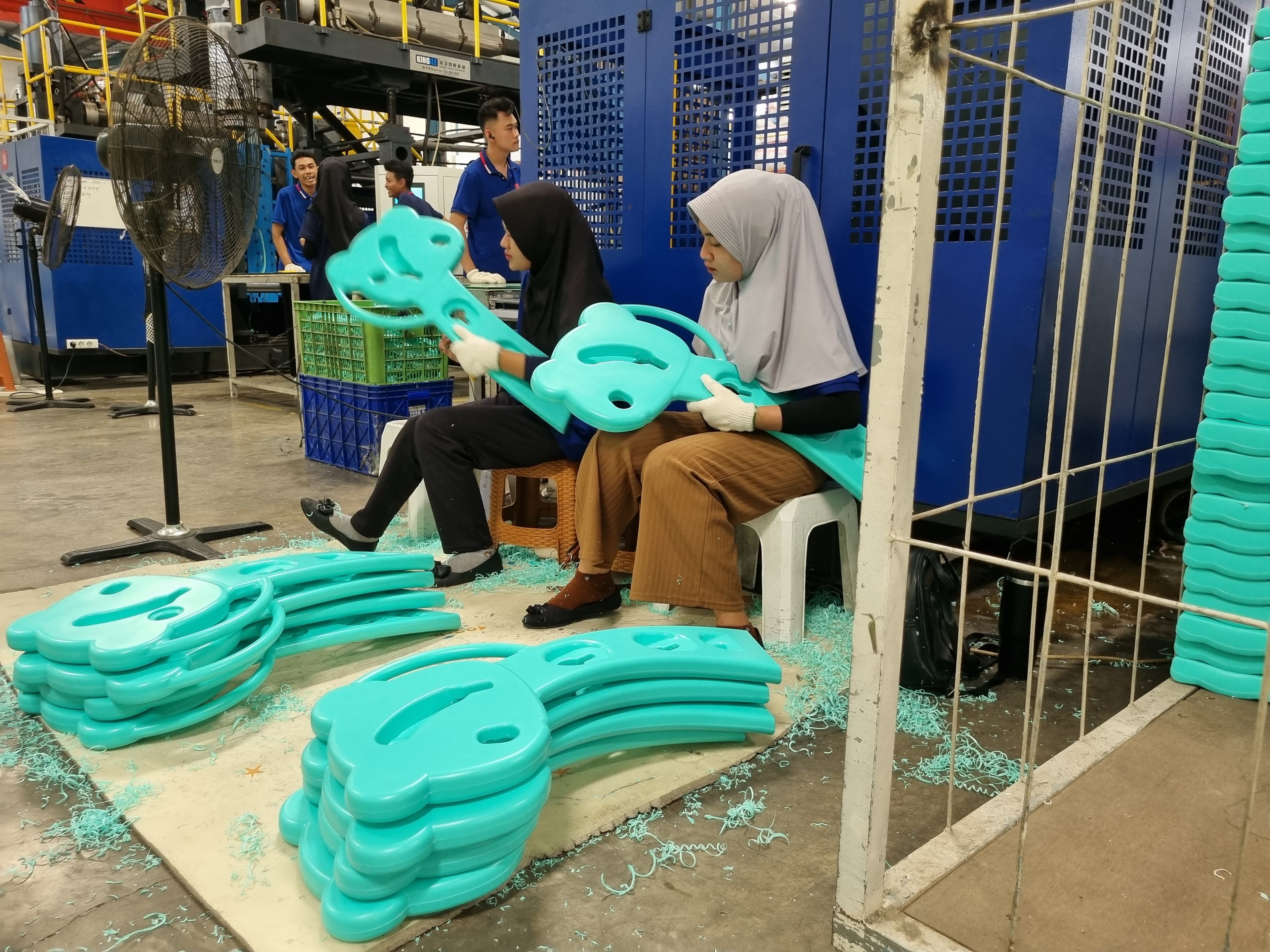
Some products still require additional work, such as trimming excess material, cutting certain sections, cleaning surfaces, or installing supporting components.
This stage is known as finishing.
For molded plastic products, for example, excess material around the edges may need to be trimmed to ensure that the final product matches the design.
Finishing work must be carried out carefully to avoid damaging the shape or function of the product.
6. Product Quality Inspection
After the product has been formed, inspections are conducted to determine whether it meets the specifications.
Inspections may include dimensional measurements, surface condition observations, checking component completeness, and functional testing.
The type of testing is adjusted according to the characteristics of the product.
Products that do not meet the criteria may be separated for further inspection. Depending on the type of nonconformity and company regulations, these products may need to be repaired, reprocessed, or rejected.
Quality control is not limited to this final stage. Inspections can also be conducted when materials are received and while machines are operating.
7. Packaging, Storage, and Shipping
Products that meet the requirements are then prepared for storage or shipment.
Packaging methods must be adjusted according to the size, shape, weight, and risk of damage during transportation.
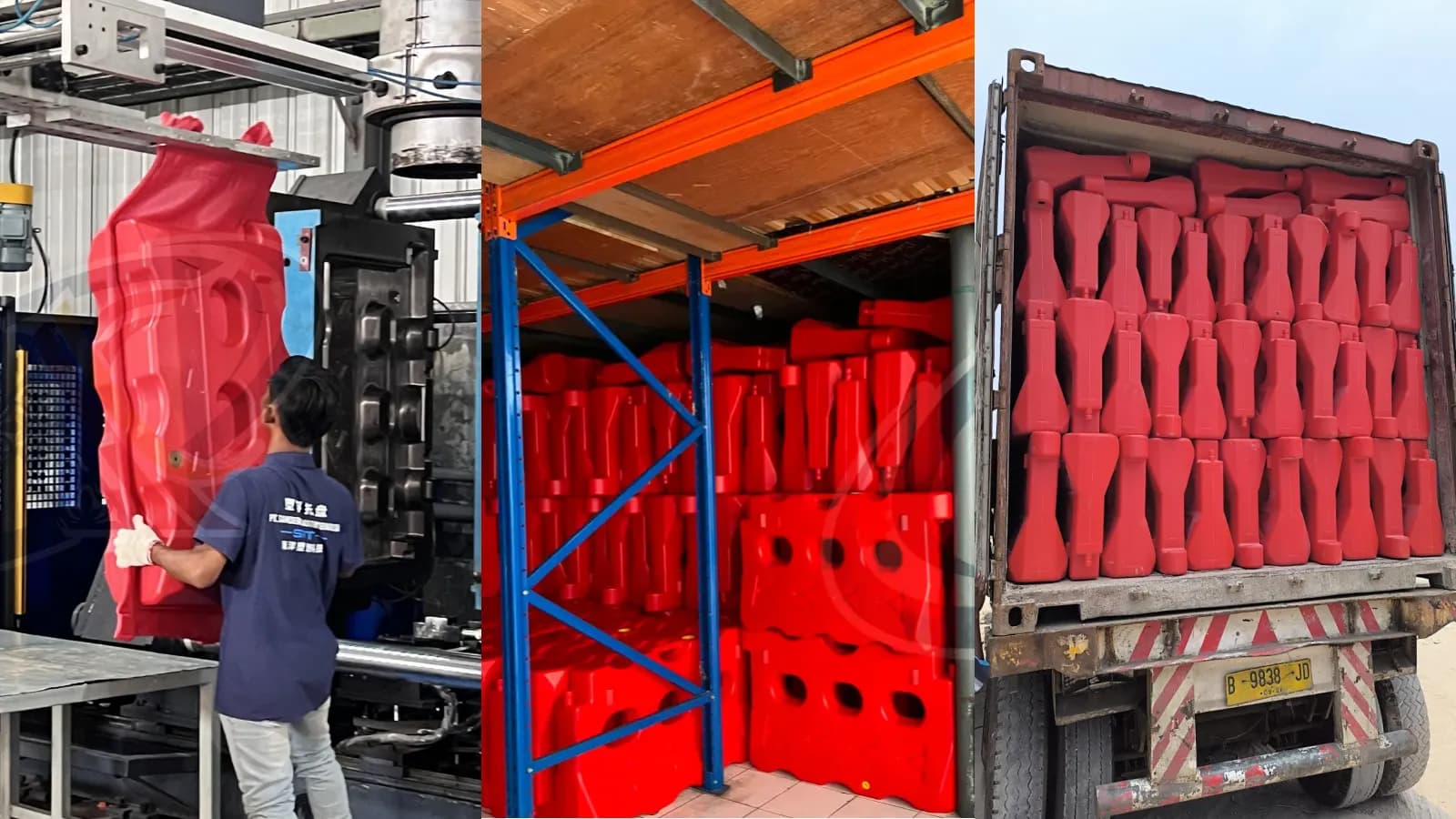
Large products may require special stacking arrangements when loaded onto vehicles. Meanwhile, smaller products are usually packaged in specific quantities to simplify counting.
At this stage, recording the quantity of goods is also necessary to ensure that warehouse inventory and shipping documents remain accurate.
Production Methods Commonly Used in Factories
Not all factories apply the same production methods. The selection of a method is usually influenced by order quantities, product variations, machine capacity, and market demand.
The following are several methods commonly used in manufacturing activities.
Production Based on Orders (Job Order Production)
This method is used when products are manufactured according to customer requirements or specifications.
The products may have different sizes, shapes, or characteristics from one order to another.
Examples include the manufacture of specialized machines, custom furniture, or industrial components with specific designs.
Its advantage is flexibility in product customization. However, companies must consider the preparation time and different production costs associated with each order.
Production in Groups or Batches (Batch Production)
In batch production, goods are manufactured in groups or specific quantities.
After one batch is completed, the machines or production lines can be prepared to manufacture the next batch.
For example, a plastic factory may produce a particular product model in a specific color, then change the settings for another group of products.
This method is suitable for companies that have several product variations with fluctuating production quantity requirements.
Mass Production
Mass production is used to manufacture uniform products in large quantities.
The process is generally standardized, allowing the same operations to be performed repeatedly with the assistance of machines or production lines.
This method is widely used in the consumer goods, automotive, and high-demand plastic product industries.
Its main advantage is the ability to produce large quantities of goods through a relatively consistent process. However, mass production also requires capacity planning, equipment investment, and proper supervision.
Continuous Production
In continuous production, the flow of materials and processing operations continues uninterrupted throughout the operating period.
Examples can be found in the chemical industry, oil processing, and certain industrial processes that use a continuous flow of materials.
This method differs from batch production, which has more clearly defined production batch boundaries.
It is important to understand that mass production and continuous production are not always the same. Mass production describes the volume and uniformity of output, while continuous production emphasizes how the process flow operates.
How Are Plastic Materials Formed into Products?
The plastics industry is one example that can easily be used to understand the application of technology in the manufacturing process.
Plastic materials that initially come in granular form can be processed into products with a wide variety of sizes and functions.
The type of material and molding method are selected according to the product design.
Injection Molding
Injection molding is a plastic forming method that involves injecting melted material into a mold cavity under pressure.
After the material cools and hardens sufficiently, the mold is opened so the product can be removed.
This method is widely used for products that require repeated shapes and consistent dimensions.
Examples include automotive components, household equipment, machine components, and various models of plastic pallets.
Blow Molding
Blow molding uses pressurized air to expand heated plastic material until it conforms to the shape of the mold.
This method is widely used to manufacture products with hollow interiors.
Examples include jerry cans, drums, plastic tanks, and certain types of road barriers and plastic floats.
For large hollow products, wall thickness, corner formation, and cooling adjustments are important factors to consider.
Extrusion
Extrusion is performed by pushing melted plastic material through a die with a specific cross-sectional shape.
This process is used to produce products with a relatively consistent profile along the length of the material.
Examples include plastic pipes, sheets, profiles, and various elongated plastic products.
These three techniques have different characteristics. No single method is best for all products because the selection depends on the design, material type, production targets, and intended application.
Quality Control: How Is Product Quality Inspected?
In manufacturing activities, quality control, or QC, is part of quality management aimed at ensuring that products meet established requirements.
These inspections are necessary because production results may vary, even when the same machines and materials are used.
Changes in temperature, pressure, mold conditions, material quality, or operating errors can affect the final product.
Therefore, inspections should be carried out at several points throughout the production process.
Raw Material Inspection
Quality control begins with the inspection of materials that will be used.
At this stage, personnel check whether the raw materials meet the specified types and standards.
Materials that do not meet the requirements must be handled first so they do not enter the production process directly.
Inspection During Production
Inspection during production is known as in-process quality control.
Its purpose is to identify deviations while the process is still running.
For example, in plastic molding, inspections may include product dimensions, weight, surface condition, and the consistency of molding results.
If production results begin to deviate from the standards, operators can investigate the cause before the number of nonconforming products increases.
Final Product Inspection
Final inspection is conducted after the products have been manufactured.
At this stage, the goods are compared with the established specifications, including the required shape, dimensions, physical condition, and functions.
Some products also require specialized testing. Industrial pallets, for example, may require load capacity testing. Hollow plastic products may require leakage or airtightness testing.
Not all products must undergo the same types of testing. Inspection methods and sample quantities are determined according to usage risks, specifications, and applicable quality control procedures.
The Difference Between Quality Control and Quality Assurance
The term quality control is often used alongside quality assurance, or QA.
Both are interconnected but have different focuses.
Quality assurance places greater emphasis on establishing systems and procedures to ensure that quality requirements can be consistently met.
Meanwhile, quality control involves operational control activities, including inspections and measurements to ensure that results meet the requirements.
In other words, QA helps establish proper working systems, while QC helps inspect and control the conformity of work results.
Common Problems During Production
Even when processes have been planned, production activities can still encounter difficulties.
One common problem is the delay in raw material deliveries. This situation may require work schedules to be changed or even temporarily suspended.
Machine disruptions can also prevent production from reaching its targets. Component failures, excessively long mold changeovers, or delayed maintenance can affect operating time.
Another problem is defective products or products that do not meet specifications.
In the plastics industry, for example, molded products may experience deformation, imperfect surfaces, or dimensional differences due to unsuitable processing conditions.
Products that must be reprocessed can increase production time and costs. Meanwhile, products that cannot be used will increase the amount of wasted material.
To reduce these problems, companies can conduct scheduled machine maintenance, improve work procedures, record the causes of failures, and evaluate quality inspection results.
Good production records help companies identify recurring problems so that corrective actions can be taken based on data.
How to Measure Production Process Efficiency
Production efficiency cannot be assessed solely by the number of goods produced. Factories also need to know how much material, time, and cost are required to achieve those results.
Several indicators that can be considered include:
Production output. Indicates the number of goods successfully produced during a certain period and compares it with the planned target.
Production cycle time. Describes the time required to complete one work cycle. In repetitive processes, this data can help estimate machine production capacity.
Defective product percentage. Used to determine the proportion of goods that do not meet quality criteria compared with the number inspected or produced, according to the company's measurement definitions.
Raw material consumption. Indicates how much material is used and how much leftover material is generated during production.
Machine downtime. Records the duration when machines are not operating due to disruptions, job changeovers, or other activities that reduce available production time.
Based on these indicators, companies can identify which areas need improvement.
For example, when the number of goods produced increases but the number of defective products also rises, the increase in production does not necessarily result in better profits.
Companies need to consider production results that meet specifications, not just the number of goods coming out of machines.
Examples of Production Processes for HDPE Industrial Products
To see a more practical application, the manufacturing process can be observed in the production of products made from High Density Polyethylene, or HDPE.
This material is used for various industrial applications because it can be formed using several manufacturing methods and has characteristics suitable for many applications.
PT Karya Pilar Nusantara develops and manufactures various industrial products, including HDPE pallets, road barriers, and modular floating cubes.
Although they use the same group of materials, each product has different shapes, functions, and quality control requirements.
HDPE Road Barrier Production
Road barriers are used as dividers on roads, construction sites, industrial areas, and other locations that require access management.
Because they have hollow interiors, this type of product can be manufactured using the blow molding method, depending on the product design and production facilities used.
Factors that must be considered during manufacturing include dimensional accuracy, wall thickness, the formation of connecting sections, the condition of filling holes, and surface finishing.
Leakage inspection is also important for products designed to use water as ballast.
More detailed product information can be found on the Karpinus HDPE Road Barrier page.
HDPE Plastic Pallet Production
Plastic pallets are used as platforms for storing, stacking, and moving goods in warehousing and logistics activities.
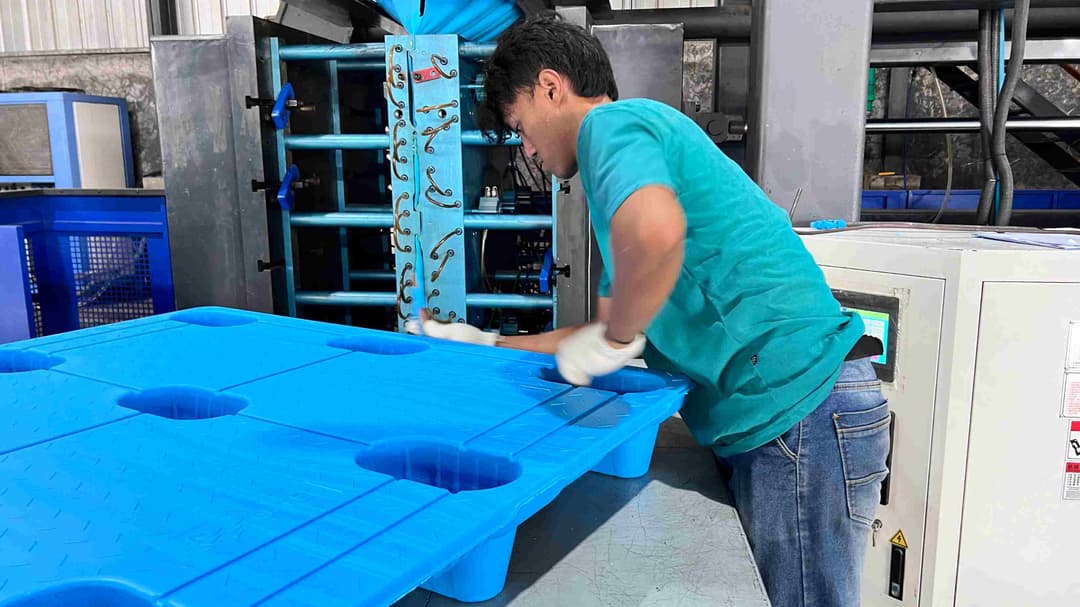
For certain pallet designs, products can be formed using the injection molding method.
Components that require attention include the upper surface, reinforcement structure, supporting legs, product dimensions, and shape accuracy after removal from the mold.
Load testing requirements must also be adjusted according to the pallet's function, whether used for storage or transporting goods.
Users can learn about the available sizes and product characteristics on the Karpinus HDPE Pallet page.
HDPE Floating Cube Production
Floating cubes are modular products used to form platforms on water surfaces, such as floating docks, pontoons, and connecting walkways.
Their manufacturing process requires attention to the shape of the modules, the condition of the body, and the locking components used to connect the units.
For hollow products used in aquatic environments, the ability to maintain watertightness and proper connection alignment are important aspects.
These inspections help ensure that the products can be used according to the design of their modular systems.
Examples of product applications can be found on the Karpinus HDPE Floating Cube page.
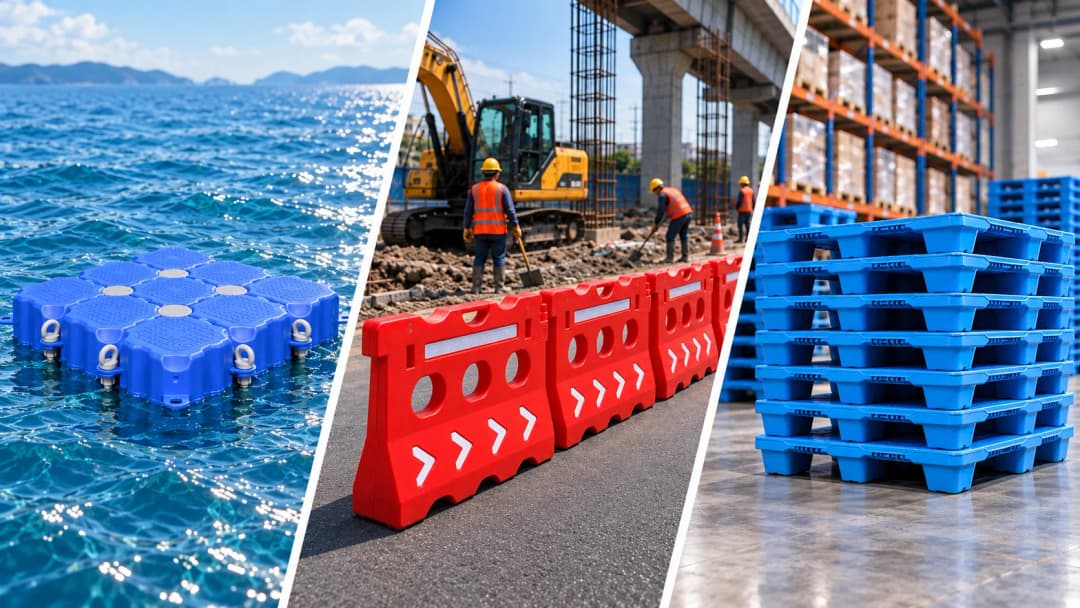
These three examples show that manufacturing production processes must follow the characteristics of the goods being produced.
Using the same raw materials does not mean that all products can be manufactured using the same machines, methods, or inspection standards.
For companies that require products in large quantities, information about specifications, supply capacity, suitability for use, and quality control is an important consideration before making procurement decisions.
Conclusion: Product Quality Begins with the Process
The production process is a series of activities that transform raw materials into goods with specific practical value. In the manufacturing industry, these activities involve planning, material procurement, machine operation, product forming, finishing, quality inspection, and shipping.
Each stage has an interconnected role. Mistakes in material selection or machine settings can affect product quality, while poor planning can disrupt production schedules and costs.
Production methods must also be adjusted according to order quantities, product types, and the capabilities of the facilities used.
Equally important is quality control. Inspections conducted from the time raw materials are received until products are ready for shipment help companies identify nonconformities and make improvements before problems develop further.
For industrial and project requirements, understanding the manufacturing process can help buyers assess a manufacturer's ability to meet the required specifications and product quantities.
For the procurement of HDPE pallets, road barriers, floating cubes, and other industrial products, product information and consultation are available through PT Karya Pilar Nusantara.