Shampoo bottles, oil jerry cans, and plastic drums have one thing in common. They have empty space inside, yet their outer shape remains sturdy. One technique used to make products like these is blow molding.
In the plastics industry, blow molding is known as a blow-forming process. Heated plastic is shaped using pressurized air until it follows the inner surface of a mold. Once it has cooled, the plastic retains the intended shape.
This technique is not limited to small packaging. Hollow products for industrial use can also be made using similar methods. So how does the blow molding process work, what machinery does it use, and what products can it produce?
What Is Blow Molding in the Plastics Industry?
Blow molding is a process for forming hollow plastic products by blowing pressurized air into softened plastic inside a mold. The air causes the plastic to expand and press against the mold walls, producing an item with the desired dimensions and shape.
Think of blowing up a balloon inside a container. The balloon expands to fill the available space. In blow molding, however, the material expanding is heated plastic rather than rubber, and it is then cooled so that its shape remains unchanged.
Because the center is hollow, this method is widely used to make storage containers, bottles, jerry cans, tanks, and various industrial components. The finished product does not always have to be round. Molds can be designed to suit the purpose of the item being made.
How Do the Stages of the Blow Molding Process Work?
Although there are several types of blow molding, they share the same basic principle: using air to shape plastic while it is still soft inside a mold. To understand the sequence, here is an example of the extrusion blow molding process, widely used for HDPE products.
1. Plastic Pellets Are Fed into the Machine
The process begins with raw material in the form of plastic granules or pellets. The material enters through a hopper, the part of the machine that holds and feeds it into the heating unit. The material type is chosen according to the product's requirements, such as HDPE for certain containers and industrial components.
2. The Plastic Is Heated Until Soft
The pellets move through the machine's barrel. Heat and the rotation of a screw help melt and push the material toward the forming section. Temperature control is needed to ensure that the molten plastic can be shaped without damaging its material properties.
3. The Molten Plastic Is Formed into a Parison
The heated material leaves the extrusion head as a hollow tube called a parison. It is still soft and does not yet resemble the finished product. At this stage, the parison's length and thickness help determine the molding result.
4. The Mold Closes and Air Inflates the Plastic
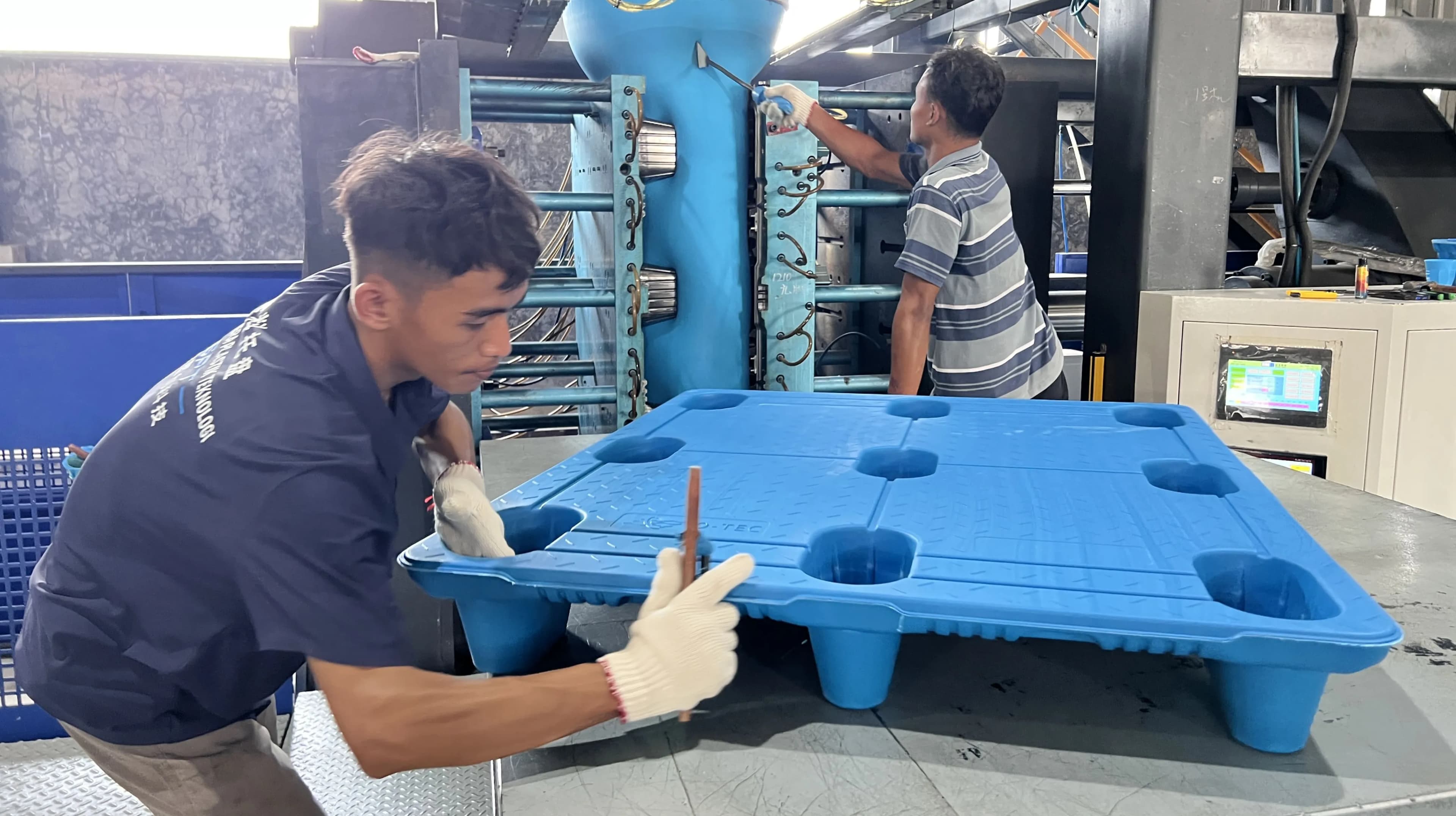
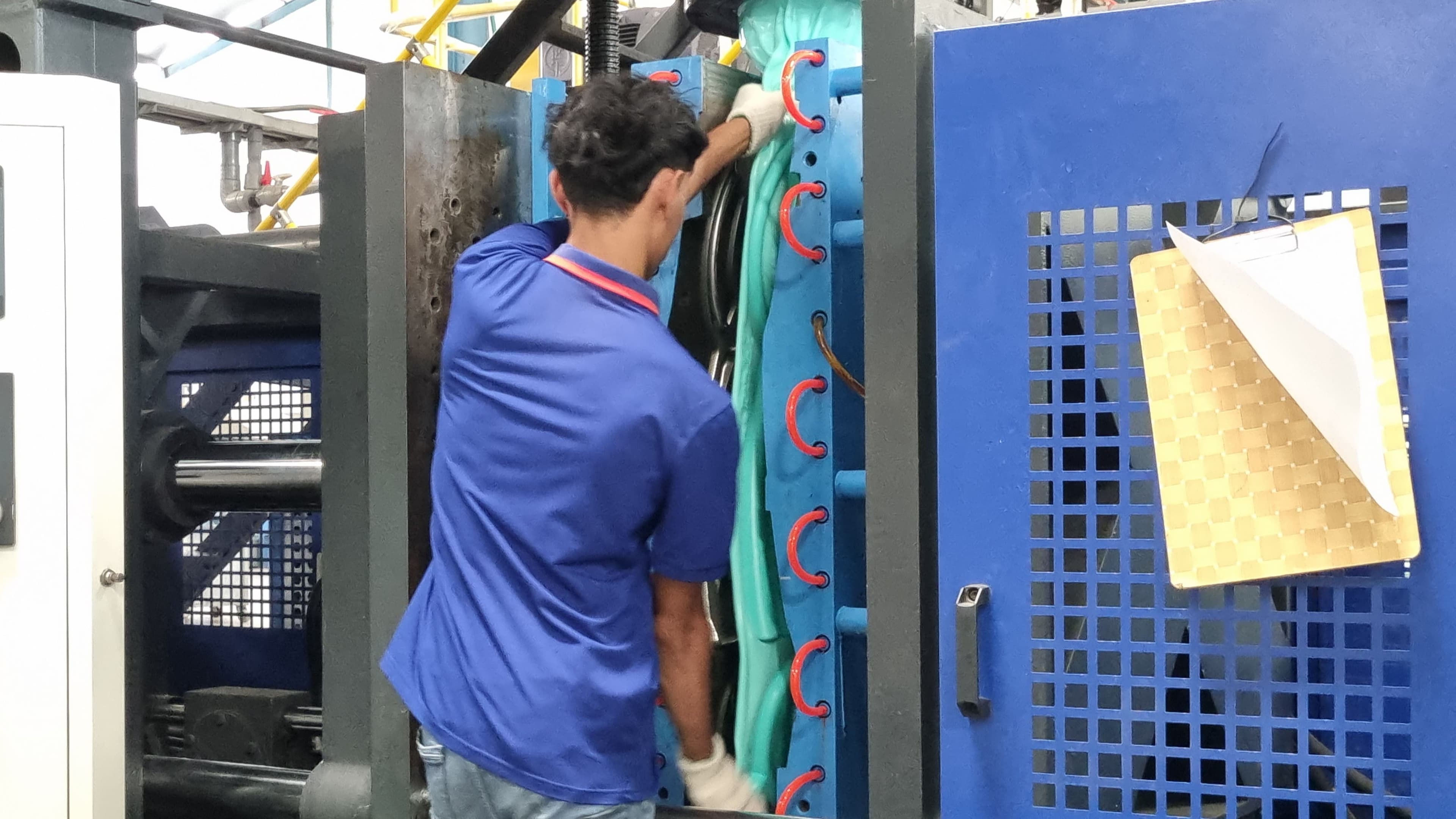
The two mold halves close around the parison. Pressurized air then enters through a blow pin, causing the plastic to expand until it touches the mold's inner walls.
5. The Product Is Cooled
The formed plastic must be cooled until it is rigid enough to retain its shape. Cooling time depends on the material type, product dimensions, and wall thickness.
6. The Mold Opens and the Product Is Inspected
After cooling, the mold opens and the product is removed. Excess plastic along the mold's joining edges can be cut away or trimmed. The product is then inspected for shape, thickness, surface finish, and possible leaks if it is intended to hold liquids.

Important Parts of a Blow Molding Machine
A blow molding machine consists of several interconnected components. In an extrusion-type machine, the main parts include:
Hopper, where plastic pellets are fed into the machine.
Extruder and screw, which heat, process, and push the plastic material forward.
Die head, which forms the molten plastic into a parison.
Mold, which determines the product's outer shape.
Blow pin and air system, which deliver pressurized air into the parison.
Cooling system, which helps the product hold its shape before removal.
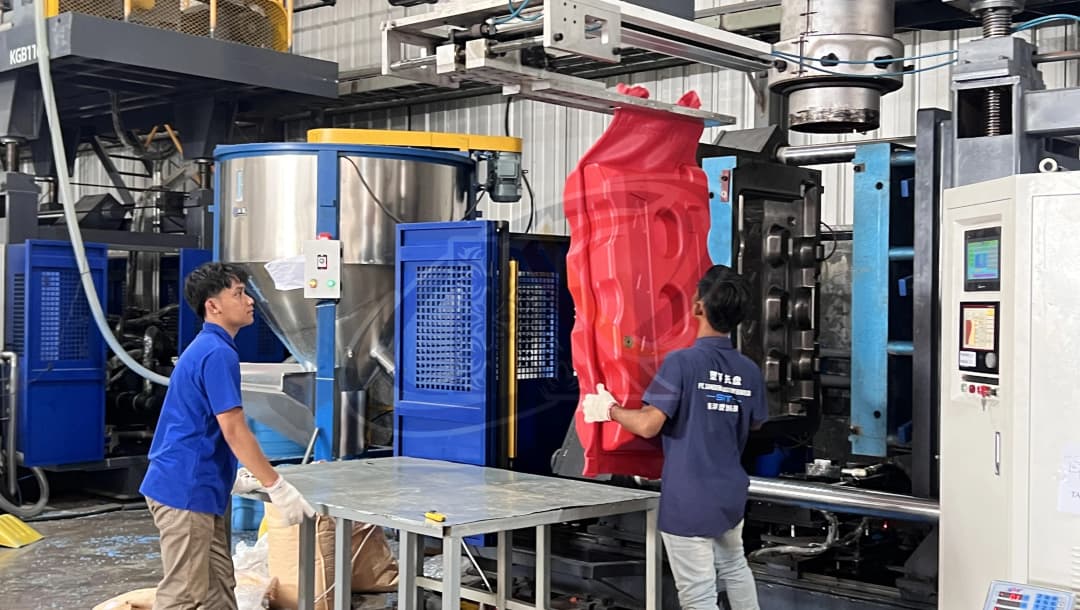
Not every machine has exactly the same arrangement. A machine used for beverage bottles, for instance, may have a different initial heating and forming system from a machine used to produce HDPE jerry cans.
Three Types of Blow Molding and Their Differences
In general, plastic blow molding can be divided into three types. The main difference lies in how the plastic is prepared before air is blown into it.
Extrusion Blow Molding
In this method, plastic is melted and extruded into a tube called a parison. The mold then closes, air is blown in, and the product is cooled. Extrusion blow molding is widely used for jerry cans, HDPE bottles, drums, and certain large hollow products.
Injection Blow Molding
The plastic is first molded by injection to create an initial form called a preform. The preform is then transferred to a blow mold and expanded with air. This technique is suitable for certain containers, particularly those requiring precise neck and thread shapes.
Injection Stretch Blow Molding
This method also uses a preform but includes a stretching stage before or during inflation. It is widely used for PET bottles, including beverage bottles. Stretching helps produce the wall characteristics required for the packaging.
Therefore, the term blow molding does not always refer to a single type of machine. The process must be selected according to the material, shape, dimensions, and intended function of the finished product.
Commonly Used Plastic Materials
Not all plastics behave in the same way when heated. The raw material must therefore be selected according to the molding method and the product's intended use.
HDPE (High Density Polyethylene) is widely used for jerry cans, certain chemical bottles, drums, and industrial products. This material has stiffness and durability characteristics suited to many packaging and hollow-product applications.
LDPE (Low Density Polyethylene) is more flexible and can be used for certain squeeze bottles that must be pressed to dispense their contents.
PET (Polyethylene Terephthalate) is commonly found in beverage bottles produced using stretch blow molding.
PP (Polypropylene) can also be used for certain applications, depending on product design and the machine type.
Besides the material name, manufacturers need to consider how the plastic flows when heated, the required product thickness, conditions of use, and applicable safety standards. A material intended for food containers does not automatically have the same requirements as one used for road barriers.
Examples of Plastic Products Made Through Blow Molding
Blow-molded products are easy to find in everyday life. Some examples include:
Bottles and liquid packaging. Shampoo, liquid soap, detergent, and similar bottles come in a wide range of sizes and shapes.
Plastic jerry cans and drums. These products need internal storage space and an outer form suited to handling and distribution.
Vehicle tanks and components. Certain fuel tanks, air ducts, and vehicle fluid reservoirs can be produced through blow molding.
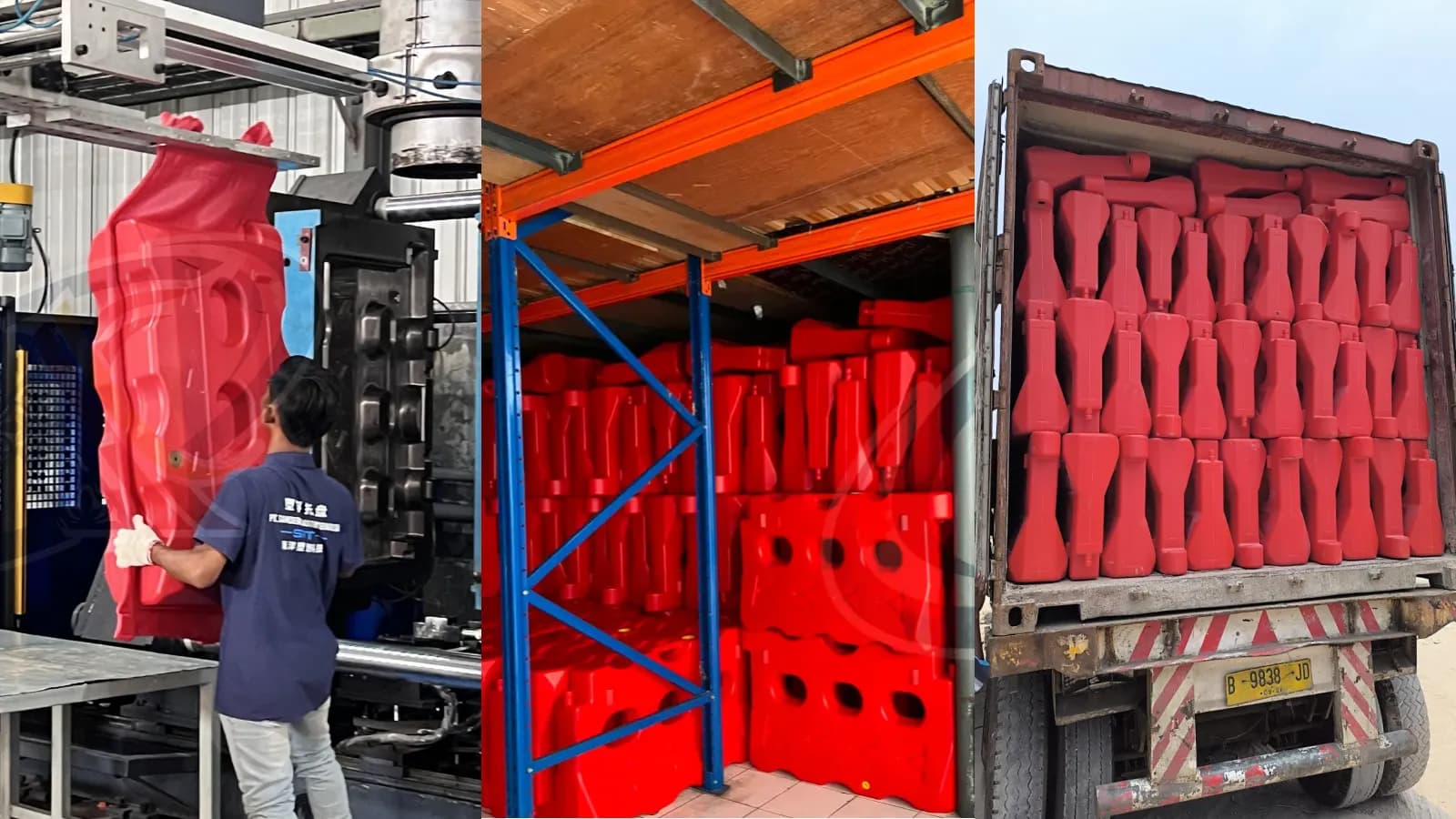
Hollow industrial products. Certain models of plastic road barriers, modular floats, and large containers can be made using blow molding, depending on their design and the production facilities available.
In project applications, hollow space serves a particular purpose. For example, HDPE road barriers are designed to be filled with water as ballast once they are in position. Meanwhile, Karpinus floating cubes use hollow construction to support a modular floating system.
Both demonstrate that hollow shapes are useful for more than bottles or packaging. However, the manufacturing method for each model still depends on its design and technical specifications. Not every HDPE product is automatically manufactured using blow molding.

What Is the Difference Between Blow Molding and Injection Molding?
Both methods use molds, but they form plastic in different ways.
In blow molding, softened plastic is expanded using air until it follows the mold walls. That makes the process suitable for products requiring an internal cavity, such as bottles and jerry cans.
In injection molding, molten plastic is injected to fill the mold cavity. Injection molding is commonly used for solid products or components with particular shape details, such as caps, connectors, and various plastic fittings. Injection-molded products can also contain cavities if the mold design allows it.
Therefore, selecting a molding method involves more than identifying the type of plastic. Product shape, intended function, production volume, precision requirements, and mold design all need to be considered.
Why Must the Quality of Blow-Molded Products Be Inspected?
A product that has come out of the machine is not necessarily ready for use. Even if its outer shape looks right, several aspects of the molding result still need to be checked.
One is wall thickness. If the material is not distributed as intended, some areas can become thinner than others. Mold conditions, temperature, and inflation settings all affect the finished product.
Another is the neatness of the joining edges and remaining excess plastic. In extrusion blow molding, certain edges usually need trimming after the product has been removed.
For products intended to hold liquids, leak testing is also important. Industrial equipment may additionally be checked for dimensions, hole functions, surface condition, and suitability for the intended application.
These checks form part of the broader manufacturing process. Raw-material preparation, forming, finishing, and quality control are also covered in the article on the manufacturing production process.
Blow Molding for Industrial Product Applications
Blow molding is one method used to produce plastic items with hollow interiors. It involves heating the material, creating an initial form, blowing air into it, cooling, and inspecting the molded product. Machines and materials may differ according to the product's requirements.
For industrial HDPE products, understanding the forming process helps explain why mold design, wall thickness, and final inspection are all important. To see an example of HDPE product manufacturing development, read the article on the Karya Pilar Nusantara road barrier factory.
If you are preparing to procure road barriers or modular floating systems, you can review the specifications on their respective product pages before deciding on quantities and purchasing requirements.