The use of plastic in the industrial sector is no longer limited to packaging and household needs. Various types of equipment for construction projects, warehousing, infrastructure, and water facilities are also widely manufactured using plastic materials.
One of the materials used is HDPE, or High Density Polyethylene. This type of plastic can be formed into various products with different sizes and functions, ranging from road barriers, pallets, and floating cubes to water storage tanks.
This is where HDPE plastic factories play an important role. Through manufacturing processes, plastic raw materials are processed into products that can support operational activities and large-scale project requirements.
This development has also encouraged PT Karya Pilar Nusantara to strengthen its HDPE product manufacturing operations. The development of production facilities is part of the company's efforts to increase supply capacity while maintaining the quality of the products it markets.
HDPE Plastic Factories and Their Role in Industry
An HDPE plastic factory is a manufacturing facility that processes High Density Polyethylene raw materials into finished products through forming processes using specialized machines and molds.
Unlike companies that only distribute goods, plastic product factories are directly involved in manufacturing activities. The process begins with material preparation, machine operation, and product forming, followed by inspection of finished products before storage or delivery.
In industrial operations, factories play a significant role. Many companies require operational equipment with specific dimensions, quantities, and specifications that must be available according to their project schedules.
For example, construction projects require road barriers to manage work areas. Logistics companies need pallets for storing and moving goods, while water infrastructure projects use floating cubes as part of the construction of floating docks or platforms.
These products serve different purposes. However, all of them require production planning and material selection that suit their intended applications.
Therefore, the presence of HDPE product manufacturers helps companies obtain the products they need through a more structured production process, particularly for large-volume procurement.
Why Is HDPE Material Widely Used?
HDPE is a type of polyethylene known for being relatively strong, rigid, and resistant to moisture and various chemicals.
This material also does not corrode like metal. These properties make HDPE widely used for products that come into contact with water, humid environments, and outdoor operational activities.
In addition to its material characteristics, HDPE can be processed into various shapes using plastic manufacturing techniques. This allows manufacturers to produce hollow products, modular components, and industrial equipment with specific structural designs.
For example, road barriers require a hollow plastic body so they can be filled with water as ballast. Meanwhile, floating cubes need a sealed structure that can generate buoyancy when used in water.
These two products serve different functions even though they use the same base material.
It is important to understand that using HDPE does not automatically give every product the same strength or durability. The final result is also influenced by material grade, design, thickness, forming process, and conditions of use.
For products used outdoors, material formulation and protection against sunlight exposure are also important considerations in material selection.
From Plastic Pellets to Finished Products: The HDPE Production Process
The manufacturing process for HDPE plastic products involves several stages. Each stage must be adjusted according to the product's shape, the type of machine used, and the required specifications.
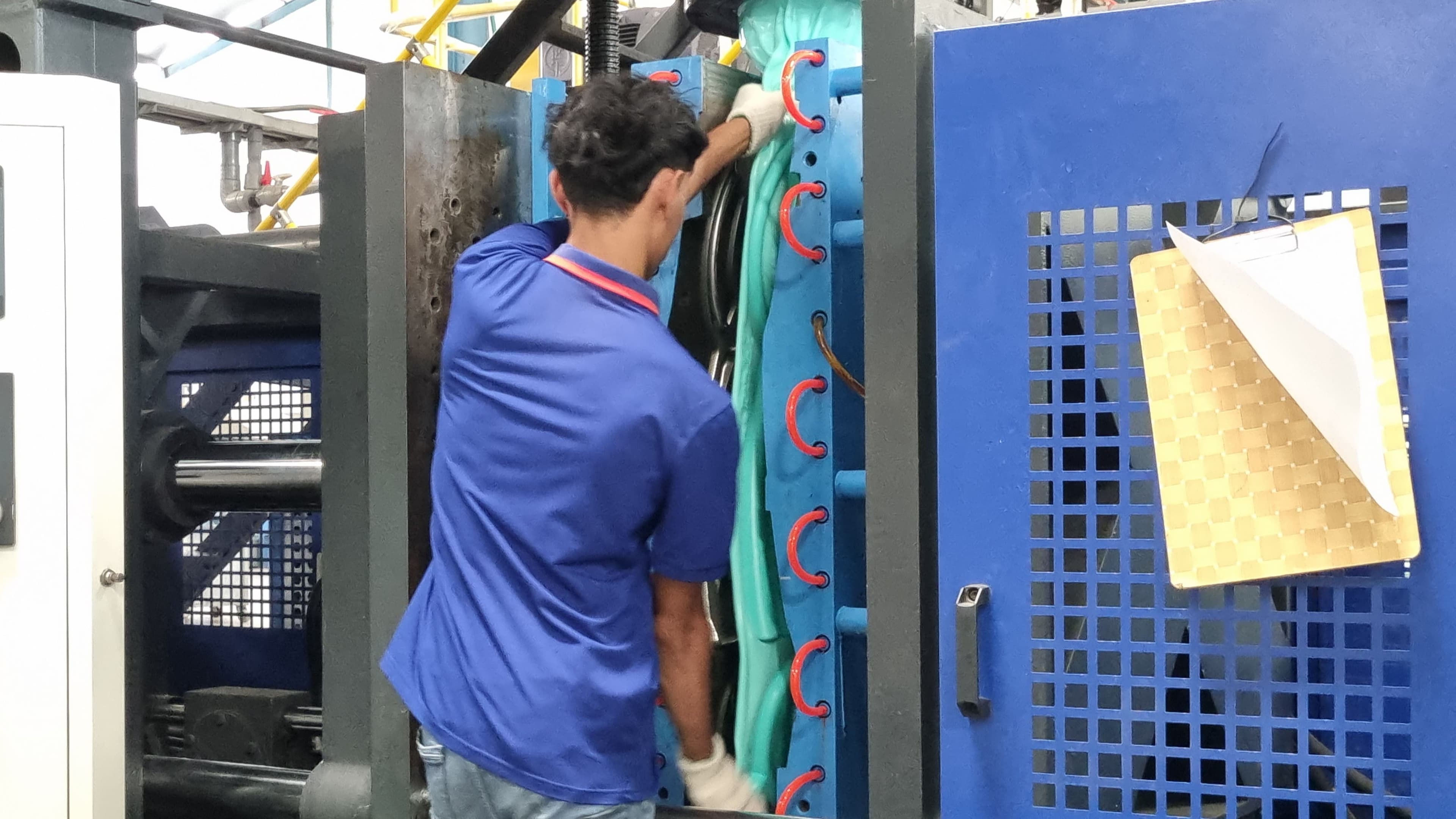
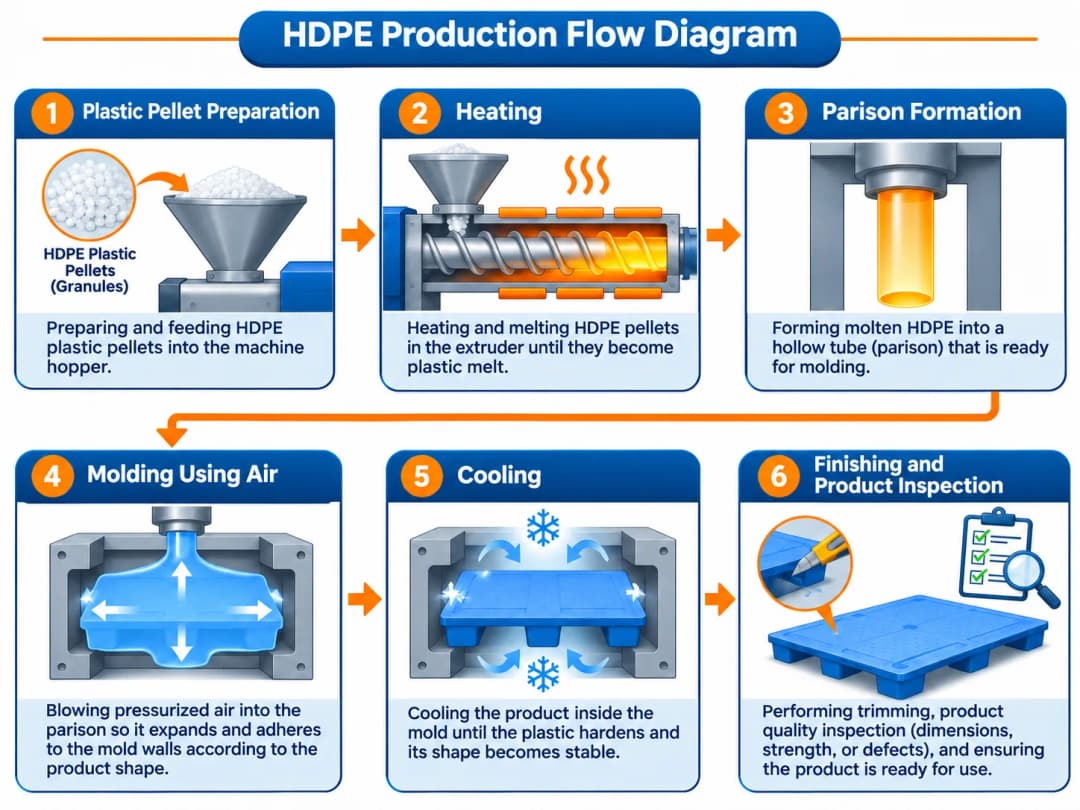
One method used in the plastics industry is blow molding, a technique for forming hollow plastic products by using air pressure inside a mold.
Preparation of Raw Materials and Molds
Production begins by preparing raw materials in the form of HDPE plastic pellets or resin according to the product's requirements.
Materials are selected based on the characteristics needed. For certain products, raw materials may also be mixed with colorants or other additives according to the production formulation.
In addition to material preparation, the mold must be prepared based on the product design.
The mold determines the final shape of the product, including its dimensions, curves, connection points, and other structural details.
Therefore, the shape and condition of the mold have a significant influence on the production results.
Plastic Forming Using Blow Molding Machines
In the extrusion blow molding process, plastic pellets are heated inside a machine until they become a material that can be formed.
The softened plastic is then extruded into a hollow tube called a parison. This section is positioned between the prepared mold halves.
Once the mold closes, pressurized air is introduced into the parison, causing the material to expand and follow the shape of the mold cavity.
This process allows manufacturers to produce hollow plastic products with predetermined dimensions and designs.
Blow molding is widely used to manufacture products such as jerry cans, plastic tanks, and various other hollow components.
In addition to blow molding, the plastics industry also uses other methods such as injection molding, which involves forming materials by injecting molten plastic into a mold under pressure. The choice of technique depends on the construction and requirements of each product.
Product Cooling and Finishing
Once the product has been formed, the material is cooled until it becomes sufficiently rigid to be removed from the mold.
The molded product then enters the finishing stage. During this stage, excess material along the edges or mold seams may be trimmed as needed.
For certain products, finishing also includes drilling holes, installing components, and adding accessories.
The finished products are then inspected before being declared ready for storage or distribution.
A Variety of HDPE Products for Industrial Needs
The use of HDPE continues to expand because this material can be formed into products with various functions. The resulting products are not always small. Some are large components used directly in project activities and industrial operations.
PT Karya Pilar Nusantara develops and supplies a range of HDPE industrial plastic products to meet these different needs.
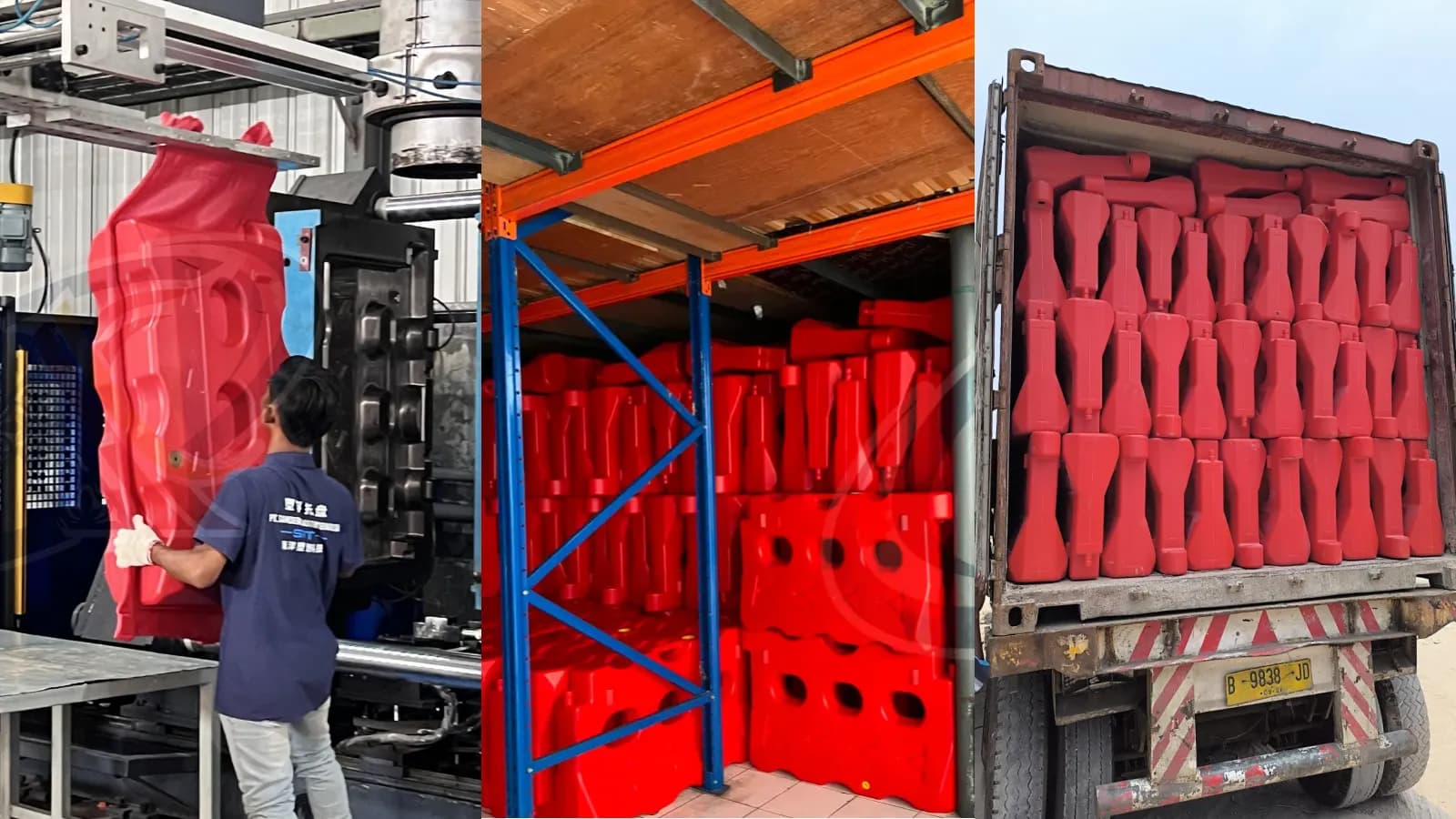
HDPE Road Barriers for Area Separation
Road barriers are modular barriers used to help regulate vehicle routes, separate work areas, and restrict access to certain locations.
These products have a hollow structure that allows them to be filled with water as ballast after being positioned at the intended location.
One of the products developed by PT Karya Pilar Nusantara is the Karpinus Road Barrier. This product is available in several models to meet the needs of area management for projects, roads, industrial zones, and public activities.
Through its own manufacturing operations, the company has greater control over the production process and the readiness of road barrier supplies.
Further product information is available on the Karpinus HDPE Road Barrier page.
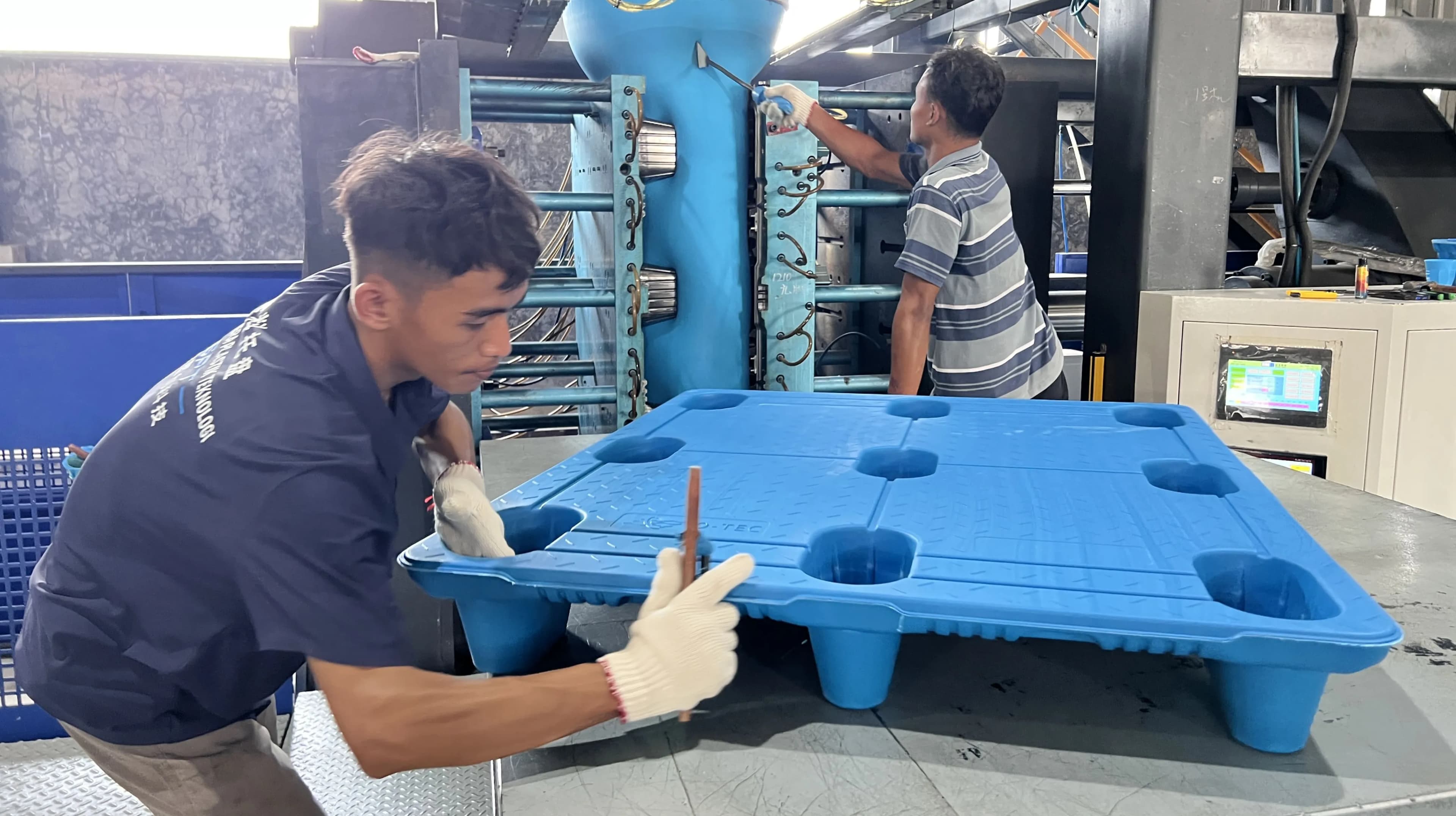
HDPE Pallets for Warehousing and Logistics
Plastic pallets are a type of equipment used to place, store, and move goods in industrial operations.
HDPE pallets are commonly used in storage warehouses, production facilities, distribution centers, and goods transportation activities.
Compared to wooden pallets, HDPE pallets do not absorb water in the same way as wood and do not require treatment against termite infestation. Their surfaces are also relatively easy to clean.
PT Karya Pilar Nusantara supplies HDPE pallets in several sizes, structural designs, and load capacities.
These differences allow companies to select pallets according to the type of goods, handling methods using forklifts or hand pallet trucks, and storage requirements.
HDPE Floating Cubes for Water Infrastructure
Floating cubes are hollow plastic modules used to form floating structures on the water's surface.
Multiple cube units can be connected using a locking system to create platforms with specific dimensions and configurations.
These products are used for various purposes, including the construction of floating docks, floating bridges, fish cages, water tourism facilities, and work platforms.
Karpinus Floating Cubes supplied by PT Karya Pilar Nusantara measure 50 × 50 × 40 cm per unit and feature a modular connection system.
HDPE is used because it is suitable for floating structures that come into contact with water. However, platform capacity and arrangement must still be planned according to load requirements and water conditions.
Product details and available accessories can be found on the Karpinus Floating Cubes page.
Water Storage Tanks and Septic Tanks
In addition to road barriers, pallets, and floating cubes, HDPE is also used in the manufacturing of water storage tanks and sanitation products.
For products such as water storage tanks, plastic materials are formed into hollow containers designed to hold water according to their capacity and intended use.
Meanwhile, plastic septic tanks are used as components of domestic wastewater storage and treatment systems.
Water storage tanks and septic tanks are also part of the direction of PT Karya Pilar Nusantara's HDPE product line development.
This development creates opportunities to expand the types of products that can be supplied for buildings, public facilities, and infrastructure projects.

Maintaining Product Quality Throughout the Production Process
In manufacturing operations, product quality is not determined solely by external appearance.
Products that look neat must still meet the required dimensions, shapes, and functions. This is particularly important because industrial plastic products are often used repeatedly or become part of larger operational systems.
During production, several aspects can be inspected, including dimensional accuracy, weight, surface condition, material thickness, and the finishing quality of molded parts.
For hollow products, inspections may also include the condition of seams and potential leaks. Meanwhile, for modular components, locking point positions must be accurate so that units can be assembled as intended.
The types and methods of testing naturally differ for each product.
Road barriers require inspections of their bodies and connections between units. Pallets require attention to their structural design and suitability for the intended load capacity. Floating cubes, on the other hand, need structures and locking systems that meet their design requirements.
Through production monitoring and quality inspection, manufacturers can reduce product nonconformities before goods enter the distribution stage.

The Development of Karya Pilar Nusantara's HDPE Plastic Factory
PT Karya Pilar Nusantara continues to strengthen its manufacturing operations to support the supply of HDPE products for industrial and project requirements.
The operation of the road barrier production facility announced by the company in October 2026 marked one of the steps in this development.
This facility is not only intended to meet road barrier demand but also to support the development of various other HDPE products.
With its own production operations, the company has greater opportunities to monitor manufacturing processes, adjust production plans, and prepare product availability according to customer needs.
As an HDPE product manufacturer and industrial product supplier, PT Karya Pilar Nusantara strives to connect manufacturing activities with a more integrated procurement and distribution process.
This development also supports the company's ability to serve product demand from various sectors, including construction, warehousing, logistics, and water infrastructure.
Supporting the Needs of Projects, Suppliers, and Distributors
Industrial product procurement has different characteristics from purchasing goods for personal use.
In construction projects or corporate procurement, the quantity of goods required may reach hundreds or thousands of units. In addition to product specifications, quantity certainty, procurement schedules, and delivery readiness are important factors to consider.
The presence of an HDPE plastic factory supports this process because production planning can be directly linked to supply requirements.
For contractors, product availability according to schedule can help ensure smooth project operations. Meanwhile, for suppliers and distributors, a consistent supply is necessary to meet ongoing customer demand.
PT Karya Pilar Nusantara serves industrial product procurement needs for private companies, contractors, government institutions, suppliers, and distributors.
Through the support of production facilities and distribution networks, the company strives to supply products with specifications and quantities that meet customer requirements.
For large-volume orders, discussions can begin early regarding product types, specifications, available variants, required quantities, and delivery plans.
HDPE Production for the Growing Needs of Industry
HDPE plastic factories play an important role in supplying various types of industrial equipment, ranging from infrastructure components to everyday operational needs.
Through raw material selection, forming processes, finishing, and quality inspections, HDPE materials can be processed into products with diverse shapes and applications.
Road barriers, plastic pallets, and floating cubes are examples of HDPE applications commonly found in project activities, logistics, and the development of water facilities.
PT Karya Pilar Nusantara continues to develop its HDPE manufacturing and product supply capabilities to support these needs.
By strengthening its manufacturing and distribution operations, the company strives to provide easier procurement solutions for customers who require a continuous supply of industrial products.
For information about specifications, product options, and large-volume procurement requirements, visit the official PT Karya Pilar Nusantara website or contact the company's team for further consultation.